
For Organizations
At Healing & Resilient NJ, we are committed to supporting organizations in their journey towards becoming trauma informed.
Below you will find some tools, educational materials, and practical tips to help you enhance or implement trauma-informed approaches within your organization. Learn how to create an environment that acknowledges and addresses the impact of trauma, promoting resilience and well-being.
 Is your organization interested in assessing their trauma informed practices?
The TRUST assessment tool is available for organizations around New Jersey - for free! TRUST 2.0 identifies practical ways for organizations to promote inclusive, healing-centered practices in the workplace through improved physical spaces, staff training, internal communications, and customer relations. Learn more about trauma informed assessments for organizations at New Jersey Department of Children and Families, Office of Resilience.

Understanding Trauma-Informed Approaches
The Substance Abuse and Mental Health Services Administration (SAMHSA) promotes trauma-informed care for individuals by emphasizing safety, trust, collaboration, and empowerment. SAMHSA outlines key assumptions and principles for organizations or systems that are trauma-informed in the Practical Guide for Implementing a Trauma Informed Approach. The principles are aimed to support organizations in implementing practices that foster resilience and healing.
The Four R's of Trauma-Informed Care
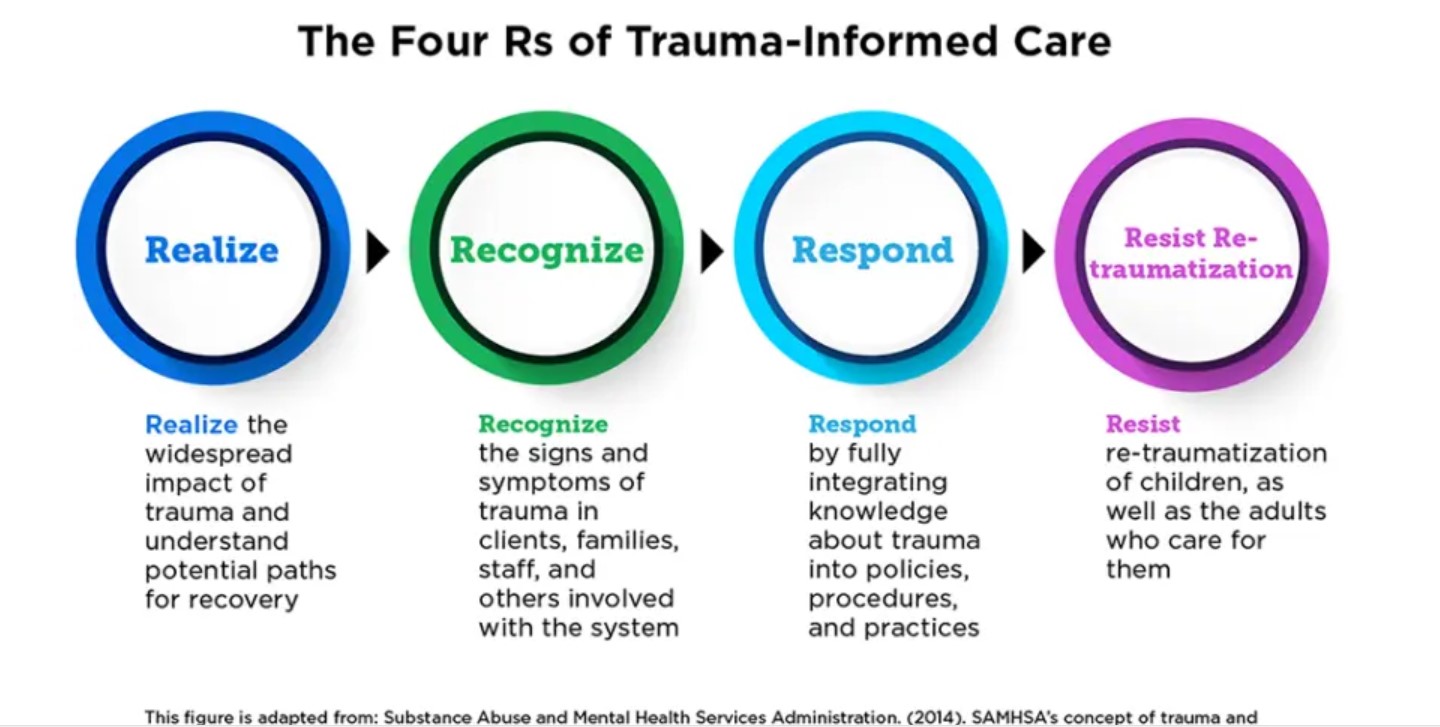
Trauma-informed approaches are guided by four assumptions, known as the “Four R’s”: Trauma-informed approaches involve realize the widespread impact of trauma and understands potential paths for recovery; recognize the signs and symptoms of trauma in clients, families, staff, and others involved with the system; and responds by fully integrating knowledge about trauma into policies, procedures, and practices, while seeking to actively resist re-traumatization.
The Six Principles of Trauma-Informed Care
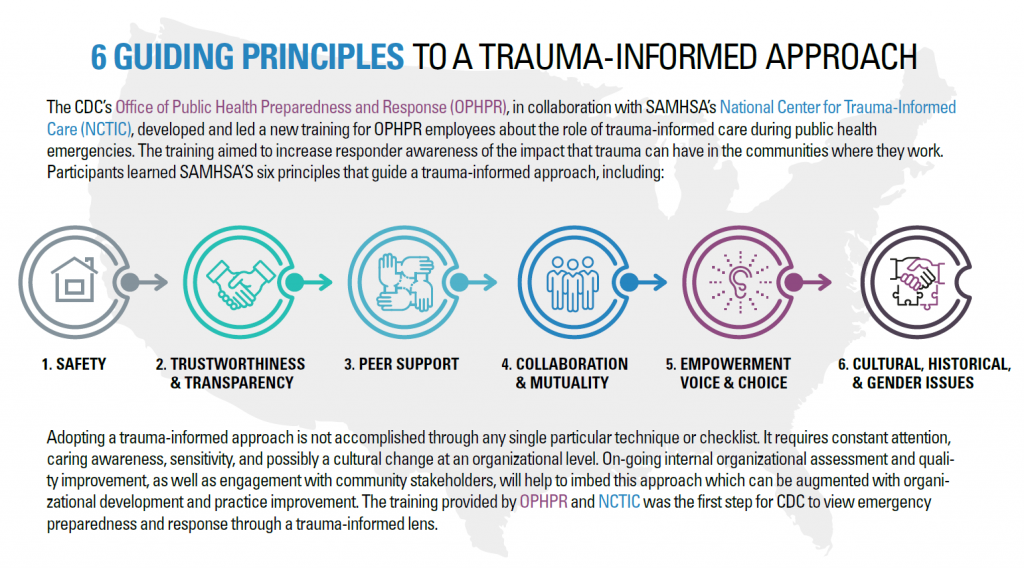 Adopting a trauma-informed approach is not accomplished through any single technique or checklist of actions. It requires ongoing attention, caring awareness, sensitivity, and possible paradigm shifts at an organizational level. Trauma-informed approaches recognize and intentionally respond to the lasting adverse effects of experiencing traumatic events, through adaptation of these key principles.
- Safety: Ensuring physical and emotional safety for everyone.
- Trustworthiness and Transparency: Building trust through transparency and consistency.
- Peer Support: Utilizing peer-based support to enhance recovery and healing.
- Collaboration and Mutuality: Fostering a partnership approach at all levels.
- Empowerment, Voice, and Choice: Prioritizing empowerment and providing choices.
- Cultural, Historical, and Gender Issues: Recognizing and addressing cultural and historical factors.
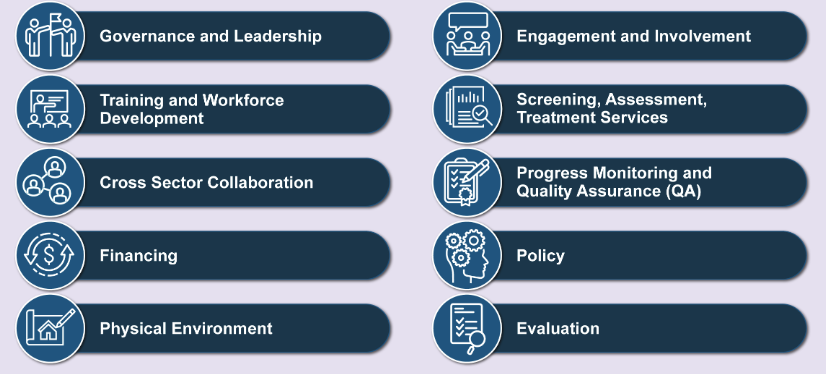
- Engagement and Involvement
You can learn more by following these links about Lived Experience and Authentic Engagement and Shared Leadership and Co-design.
Access more trauma informed resources here.