
Talking TRUST: Helping Organizations Assess their Trauma-Informed Potential
by Rebecca Bryan 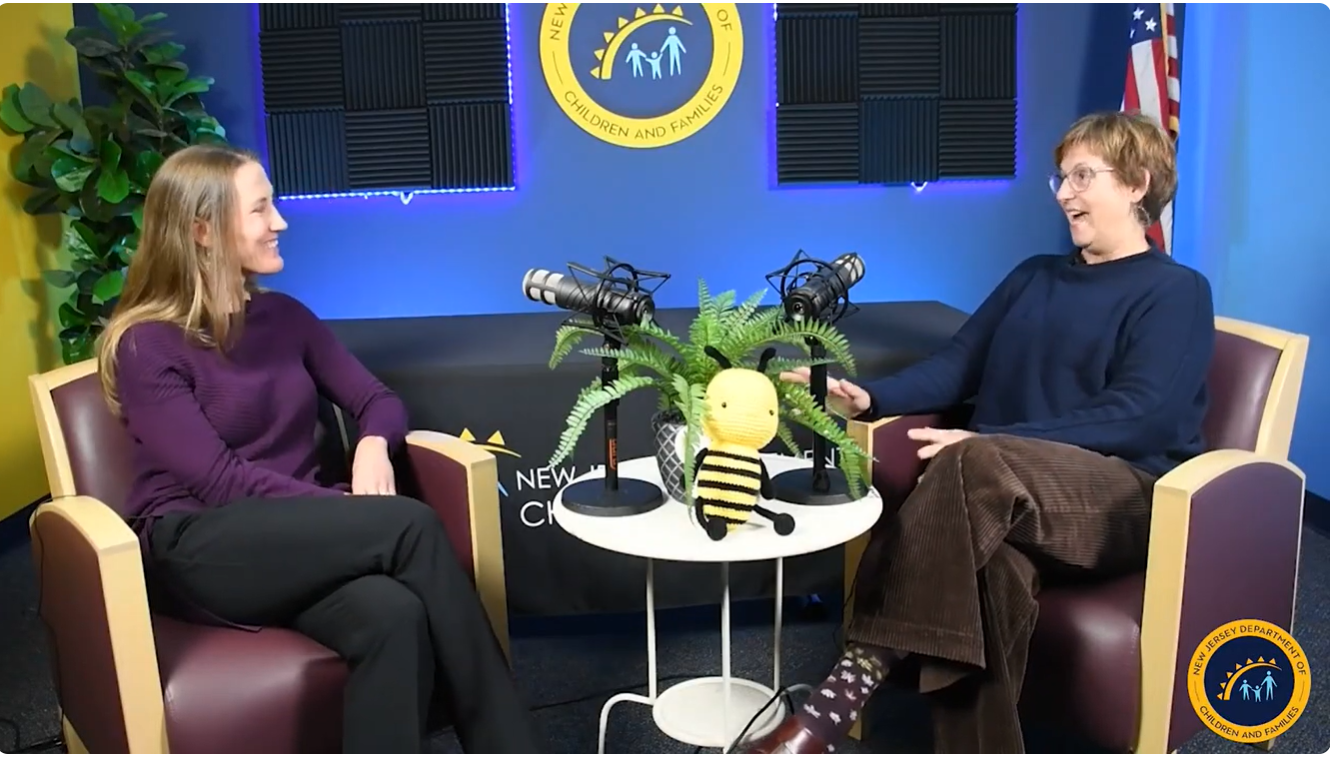
“What would happen if our communities really understood what trauma informed approaches meant? And if we really operated from trauma informed principles across the board, because there are so many opportunities for healing, for connection that we miss when we don’t stop and think – who is the human being behind the behavior on the surface? We forget to think about the brain survival responses and the life experiences leading up to that behavior.” – Jenna Velez, CCSI, New York
It’s been 18 months since the NJ Department of Children and Families’ Office of Resilience (OOR) facilitated free access for any New Jersey organization to the Trauma Responsive Understanding Self-Assessment Tool (TRUST), made available to us through contracting with CCSI in New York. Recently I sat down with Jenna Velez, Director of Practice Transformation at CCSI, to reflect on lessons learned. Now, Jenna and I enjoy each other’s company, and we are both passionate about trauma informed approaches, so it wasn’t long before we were deep into conversation, sharing nuggets of wisdom gleaned from working with organizations. You can watch our conversation here.
Some context: OOR is working to advance the vision that New Jersey becomes a trauma informed and healing centered state, with upstream initiatives, informed by community voice, aimed at providing individuals, communities and organizations with useful resources that promote trauma informed resilience. One of our goals is to standardize language throughout the state regarding what it means to be trauma informed. How do we get there? And how to we measure that? Offering the TRUST to organizations seeking to become trauma informed is our answer to the latter question.
As Jenna points out in our conversation, so much of trauma informed work is values-driven, but how do we translate our values into action? Using the TRUST provides a roadmap to organizations for where to start. The TRUST is based on the Substance Abuse Mental Health Services Administration (SAMHSA)’s 10 Domains of Trauma Informed Approaches, has 45 questions that takes staff about 15 minutes to complete and generates a report that includes recommendations with resources. Since 10 domains can admittedly feel daunting, OOR offers free, one-hour consultations to review results, with the option to continue with a year of free coaching that puts organizational values into action. This past 18 months, Jenna has mentored our team in providing these consulting sessions.
Some lessons learned we discuss during our conversation:
• Transparency in organizations is a key component to building trust, and one simple step is to always explain why decisions are made.
• Change begins within the organization by applying trauma informed principles to ourselves and our staff, recognizing how trauma shows up in the workplace.
• We know relational health is the foundation of resilience, and that relationships at work matter. Organizations that embrace trauma informed principles increase the likelihood of healthy workplace relationships.
• Small changes, even one-degree pivots, have the potential to make a big difference.
• The TRUST is not a report card, and results are not good or bad – it’s “just” useful information to facilitate next steps.
Embracing trauma informed approaches is a never-ending process of listening, learning, and maintaining a stance of curiosity. Becoming a trauma responsive and healing centered organization is inherently active, requiring us to look in the mirror as well as through the microscope to see needed changes in policy and practice. It has the potential to reduce burnout, increase retention and align effort with vision and values. Interested in exploring this further? Check out resources available on the OOR virtual technical assistance center, Healing & Resilient NJ and our initiatives on NJ DCF Office of Resilience. You can also email us: DCF.OfficeofResilience@dcf.nj.gov.
Thank you for your contribution!
Help us reach out to more people in the community
Share this with family and friends