Pathways to Learning

Share Pathways to Learning on Facebook Share Pathways to Learning on Twitter Share Pathways to Learning on Linkedin Email Pathways to Learning link

We are committed to empowering individuals, families, and communities by providing comprehensive resources on Adverse Childhood Experiences (ACEs), Positive Childhood Experiences (PCEs), resilience, trauma-informed approaches, and healing-centered practices. Our goal is to foster understanding, promote healing, and build resilience for a brighter, healthier future.

Explore Our Educational Resources

On Healing On Trauma On Resilience

Montclair University's 10-week certificate course

From Trauma to Healing

Interest Form

We are committed to empowering individuals, families, and communities by providing comprehensive resources on Adverse Childhood Experiences (ACEs), Positive Childhood Experiences (PCEs), resilience, trauma-informed approaches, and healing-centered practices. Our goal is to foster understanding, promote healing, and build resilience for a brighter, healthier future.

Explore Our Educational Resources

On Healing On Trauma On Resilience

Montclair University's 10-week certificate course

From Trauma to Healing

Interest Form
  • What is Trauma?

    Share What is Trauma? on Facebook Share What is Trauma? on Twitter Share What is Trauma? on Linkedin Email What is Trauma? link
  • Understanding Trauma-Informed Approaches

    Share Understanding Trauma-Informed Approaches on Facebook Share Understanding Trauma-Informed Approaches on Twitter Share Understanding Trauma-Informed Approaches on Linkedin Email Understanding Trauma-Informed Approaches link

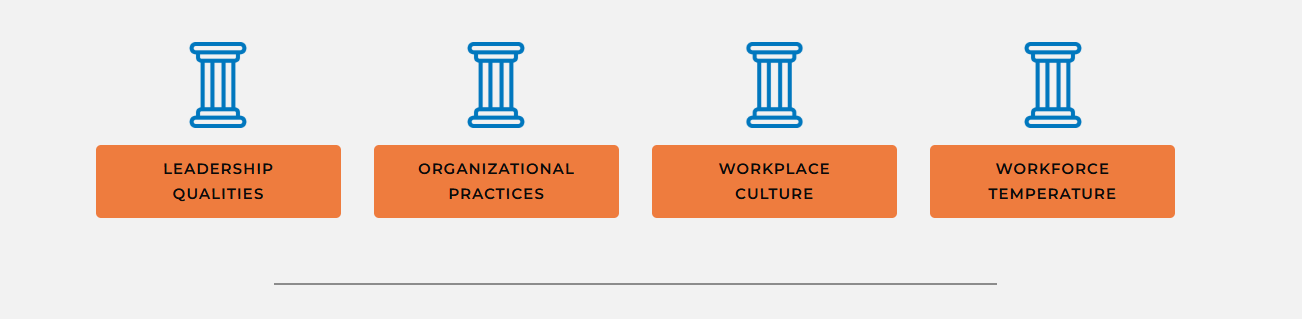
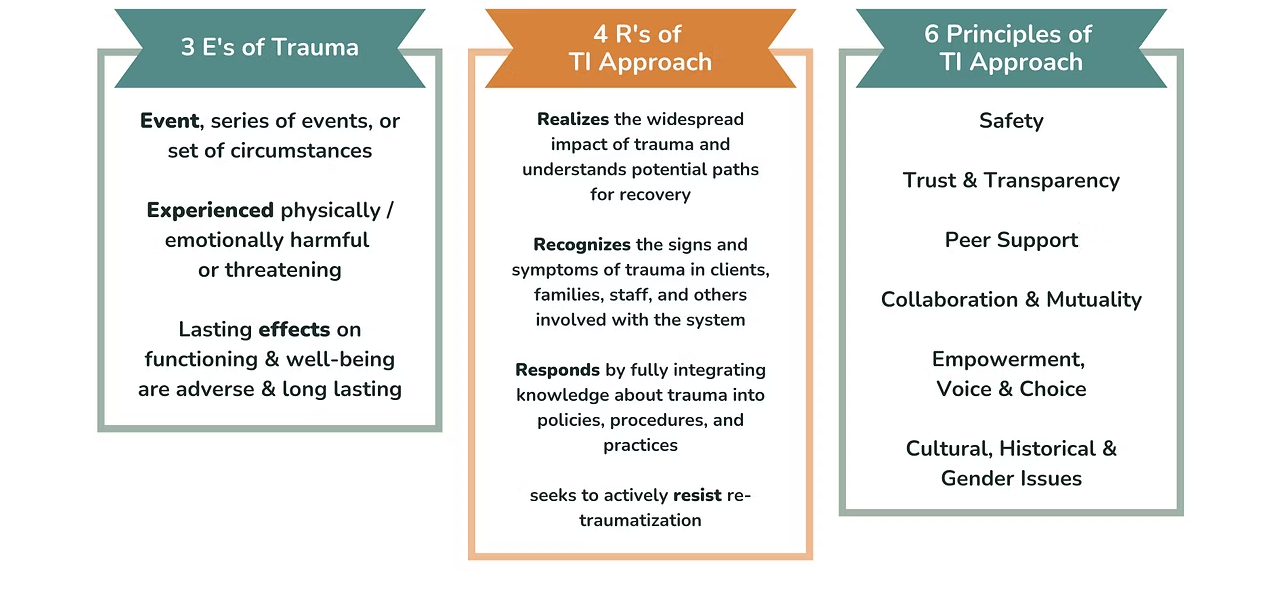
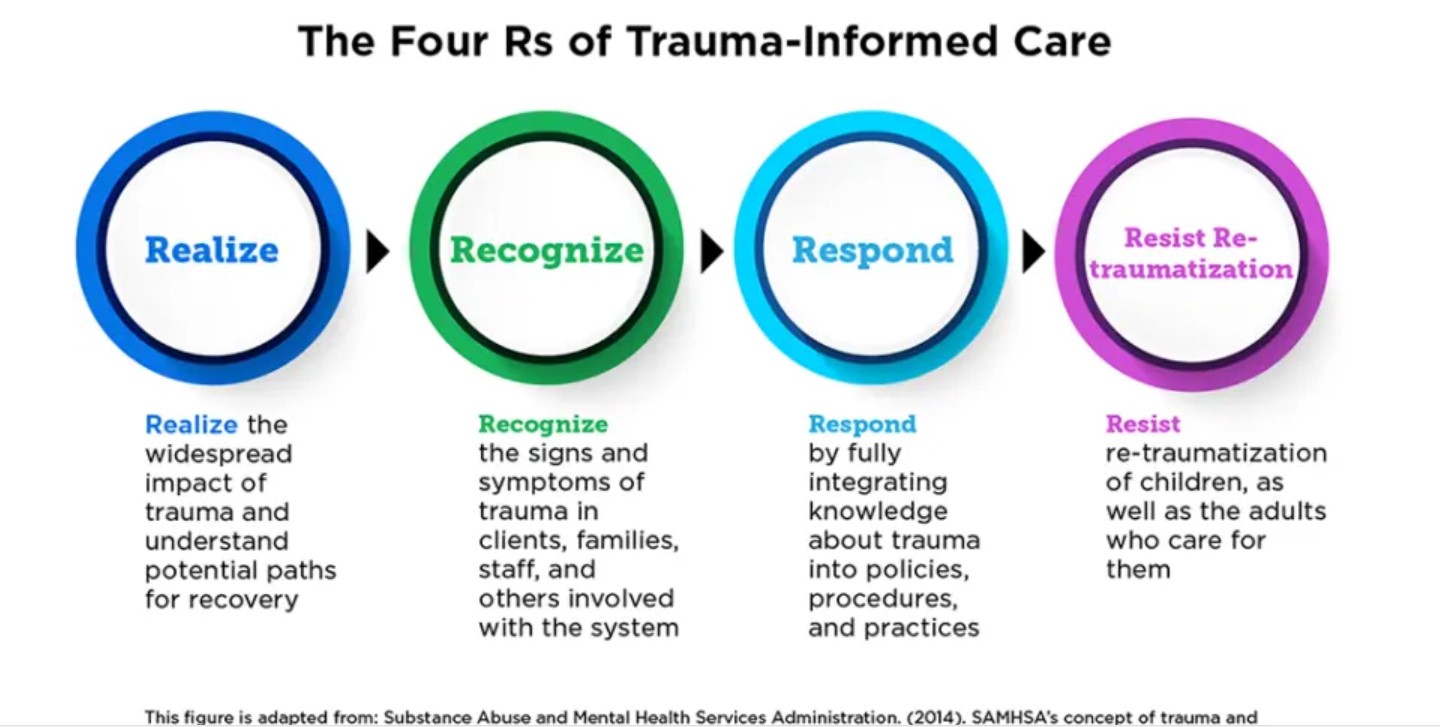
    Trauma-informed approaches involve understanding, recognizing, and responding to the effects of all types of trauma. A trauma-informed organization prioritizes and adapts:
    The Six Principles of Trauma-Informed Care

    1. Safety: Ensuring physical and emotional safety for everyone.

    2. Trustworthiness and Transparency: Building trust through transparency and consistency.

    3. Peer Support:Utilizing peer-based support to enhance recovery and healing.

    4. Collaboration and Mutuality: Fostering a partnership approach at all levels.

    5. Empowerment, Voice, and Choice: Prioritizing empowerment and providing choices.

    6. Cultural, Historical, and Gender Issues: Recognizing and addressing cultural and historical factors.

    Explore the Ten Domains of Implementation

    A trauma-informed approach is essential for organizations aiming to support individuals who have experienced trauma. The Substance Abuse and Mental Health Services Administration (SAMHSA) outlines ten key domains that provide a framework for embedding trauma-awareness and sensitivity within organizational practices. By focusing on these domains, organizations can create environments that promote healing and resilience, ensuring that trauma-informed care becomes a foundational aspect of their mission and operations. Below is the list of domains that guide the implementation of this approach. You can learn more about each domain by viewing the linked webinars.

  • Healing Centered Schools Model

    Share Healing Centered Schools Model on Facebook Share Healing Centered Schools Model on Twitter Share Healing Centered Schools Model on Linkedin Email Healing Centered Schools Model link

    The Healing Centered Schools approach is more than just a model—it’s a transformative process that redefines what it means to be an effective and compassionate school. When students feel safe, supported, and understood, they can focus on learning, build positive relationships, and regulate their emotions. This leads to improved attendance, fewer behavioral issues, improved academic outcomes, and a stronger school culture. For staff, trauma informed practices provide the support needed to manage stress and avoid burnout, fostering a healthier, more sustainable work environment. For students, addressing trauma early in their lives sets them on a path toward a healthier, more successful future. By embracing HCS, we create schools where every student has the opportunity to thrive, regardless of their past experiences. We invite you to join us on this transformative journey to support the well-being of your students, staff, and communities. Want to learn more? Click on the links:

    Want to connect with this opportunity? Contact Mary M. Reece, Ed.D.
    (she/her/hers)
    Director of Special Projects
    NJ Principals & Supervisors Association
    Foundation for Educational Administration
    p: 609-860-1200 · e:mreece@njpsa.org

  • Trauma Informed Schools

    Share Trauma Informed Schools on Facebook Share Trauma Informed Schools on Twitter Share Trauma Informed Schools on Linkedin Email Trauma Informed Schools link

    Trauma Aware Schools

    The Center for Safe and Resilient Schools have supported communities across the United States and around the world before, during, and after crises. Launched by leading experts in the field of trauma-informed schools, The Center has pioneered national practices for threat assessment, crisis response, and trauma-responsive strategies.

  • Trauma Informed Educational Material

    Share Trauma Informed Educational Material on Facebook Share Trauma Informed Educational Material on Twitter Share Trauma Informed Educational Material on Linkedin Email Trauma Informed Educational Material link

    Creating Trauma-Informed Systems | The National Child Traumatic Stress Network
    The National Child Traumatic Stress Network NCTSN.org is a resource for the public, professionals, and others who care about children and are concerned about child traumatic stress. This link provides resources on how to create trauma-Informed systems for various sectors such as school, health care, child welfare, justice system and more.

    Trauma-Informed & Healing-Centered Practices
    NJ Department of Education website line for resources to support schools in creating trauma-informed and healing centered practices.

    Community Advocacy Network | Campaign for Trauma-Informed Policy and Practice
    National grassroots advocacy and policymaking campaign committed to healing and resilience.


    Vision | Campaign for Trauma-Informed Policy and Practice
    CTIPP envisions a future where individuals, families, organizations, communities, and systems stand empowered to realize their full potential. The enclosed vision presents a variety of concrete considerations that are critical to preventing and mitigating trauma and adversity, as well as promoting resiliency, recovery, healing, and growth so that all are supported to flourish and thrive.


    Interview: The Need for Trauma-Informed Schools
    Article on the need for trauma-informed schools interview features Q&As with both professionals and users of the mental health system on topics of special interest to parents and families. They are designed to provide a closer look at new research, trends, and people.


    The Vicarious Trauma Toolkit | Introduction | Office for Victims of Crime
    The Vicarious Trauma Toolkit (VTT) was developed on the premise that exposure to the traumatic experiences of other people—known as vicarious trauma.

    The VTT includes tools and resources tailored specifically to these fields that provide the knowledge and skills necessary for organizations to address the vicarious trauma needs of their staff. To begin exploring the VTT, select one of the disciplines below and visit the comprehensive Compendium of Resources.


    Fight, Flight, Freeze, Fawn, and Flop: Responses to Trauma | All Points North
    Brief overview of five trauma responses to trauma

  • Trauma Informed Resources for Organizations

    Share Trauma Informed Resources for Organizations on Facebook Share Trauma Informed Resources for Organizations on Twitter Share Trauma Informed Resources for Organizations on Linkedin Email Trauma Informed Resources for Organizations link

    Center for Trauma-Informed Policy and Practice (CTIPP)
    This CTIPP toolkit provides educational concepts and practical strategies to support team members (I.E., defined in the toolkit as employees, staff, workers, interns, fellows, leadership, human resources and administrative professionals, volunteers, committee and board members, etc.) in advocating for more trauma-informed workplaces

    Substance Abuse and Mental Health Services Administration (SAMHSA)
    Explore SAMHSA's comprehensive guide on implementing trauma-informed approaches. This guide offers a detailed framework to help organizations integrate trauma-sensitive practices into their operations, ensuring a supportive environment for everyone.

    Center for Health Care Strategies
    This website, developed by the Center for Health Care Strategies, provides resources from trauma-informed care leaders across the country to help improve patient outcomes, increase patient and staff resilience, and reduce avoidable health care service use and costs. While geared toward health care, many of these lessons from this website can be applied elsewhere, including in social services and education.

    Trauma Informed Oregon
    Trauma Informed Oregon serves as a centralized source of information and resources for trauma informed efforts. Access learning resources, knowledge and capacity building and tool kits.

    Project Echo
    The mission at Project Echo is to educate families, communities and professionals about trauma and resilience in order to promote survivor empowerment, resolve individual and community-level trauma, and create the safe, stable, nurturing relationships that break the cycle of generational trauma.

  • Trauma Informed Information Links

    Share Trauma Informed Information Links on Facebook Share Trauma Informed Information Links on Twitter Share Trauma Informed Information Links on Linkedin Email Trauma Informed Information Links link
  • Trauma Informed Implementation Guidance, Tools, & Toolkits

    Share Trauma Informed Implementation Guidance, Tools, & Toolkits on Facebook Share Trauma Informed Implementation Guidance, Tools, & Toolkits on Twitter Share Trauma Informed Implementation Guidance, Tools, & Toolkits on Linkedin Email Trauma Informed Implementation Guidance, Tools, & Toolkits link
    • Trauma Informed Oregon provides a Road Map to trauma informed care hat shared the common steps of implementation moves through a number of common steps that organizations move through in a developmental way. The Trauma Informed Care Screening Tool builds on the Road Map by delving into each phase and offering a series of developmental actions; these tool go hand in hand.

    • The Campaign for Trauma-Informed Policy and Practice (CTIPP) provides a variety of tools and considerations that are critical to preventing and mitigating trauma and adversity, as well as promoting resiliency, recovery, healing, and growth so that all are supported to flourish and thrive.Their Community Advocacy Network is a national grassroots advocacy and policymaking campaign committed to healing and resilience.

    • The Vicarious Trauma Toolkit (VTT) was developed on the premise that exposure to the traumatic experiences of other people—known as vicarious trauma.The VTT includes tools and resources tailored specifically to these fields that provide the knowledge and skills necessary for organizations to address the vicarious trauma needs of their staff. To begin exploring the VTT, select one of the disciplines below and visit the comprehensive Compendium of Resources.

  • Frameworks on Trauma Informed Approaches

    Share Frameworks on Trauma Informed Approaches on Facebook Share Frameworks on Trauma Informed Approaches on Twitter Share Frameworks on Trauma Informed Approaches on Linkedin Email Frameworks on Trauma Informed Approaches link

    • The Need for Trauma-Informed Schools is discussed in this article through questions and answers with both professionals and users of the mental health system on topics of special interest to parents and families. They are designed to provide a closer look at new research, trends, and people.

  • Lifelong Relational Health is the Foundation of Resilience

    Share Lifelong Relational Health is the Foundation of Resilience on Facebook Share Lifelong Relational Health is the Foundation of Resilience on Twitter Share Lifelong Relational Health is the Foundation of Resilience on Linkedin Email Lifelong Relational Health is the Foundation of Resilience link

    Newborns enter the world completely dependent upon their caregivers, not only for their physical needs of food, warmth, and protection, but for emotional needs as well. Born with only the foundation for the cerebral cortex present, a newborn’s brain makes one million connections every second for the first 3 years of life. This wiring is driven by moment-to-moment experiences in their daily lives, underscoring the critical need for safe and stable, nurturing relationships in safe and stable nurturing environments.

    • When newborns experience sustained adversity such as unpredictability and abuse, the brain wires survival responses more densely.

    • When newborns experience sustained neglect (lack of nurturing and/or basic needs), the brain slows its wiring.

    • When newborns experience “good enough” parenting/caregiving, the brain wires in a way that supports health and well-being.

    The mutual responsiveness of adult-child relationships sets the foundation for all the learning, behavior and health that will occur in the future. This means that emotions experienced by the newborn, including the experience of calming down after upset (regulation), feeling safe and warm, and feeling seen and loved, turn on the genes that form the brain, with the emotional/intuitive structures of the brain growing first. These experiences form, and inform, a lifelong outlook, or worldview, as well.

    “If emotion is the ground of cognition, then relationships are the tectonic plates that shape the ground,” says Gabor Mate, physician and trauma informed expert in his book, The Myth of Normal. Society values rational, well-thought-out behavior. We need to realize that the parts of our brains responsible for rational thought - the very way we perceive the world and our experiences - is built on the emotional brain, and that caregiver relationships drive our earliest emotional experiences.

    Supportive social relationships are critical to well-being in adulthood as well, not just for happiness but for physical health and longevity. Loneliness lowers immunity and increases the risk of chronic diseases like heart disease, stroke, diabetes, and dementia.

    Knowing this, we recognize the flawed thinking in putting the onus of resilience onto the individual by defining resilience as grit, optimism, determination, and self-regulation. It’s not that these aren’t valuable but they underemphasize the value and necessity of relational health as the foundation of resilience. Therefore, to foster true resilience we must prioritize relational health:

    • Individually, by recognizing we have relationships with ourselves that we can strengthen through self-awareness, self-compassion and self-reflection

    • Interpersonally, by being intentional about connecting with others (including in-person interactions – our nervous systems are wired to be in proximity to others!)

    • Organizationally and in community, by creating cultures of trust, inclusion, and collaboration, recognizing that we form attachment relationships at work and in community as well as with family and friends.

    How is your relational health? How and where do you connect with others? We’d love to hear from you, and hear what resources would help you with connection, at the New Jersey Office of Resilience: DCF.OfficeofResilience@dcf.nj.gov.

    “If emotion is the ground of cognition, then relationships are the tectonic plates that shape the ground.” – Gabor Mate, MD

    References

    Center on the Developing Child, Harvard University, 2025. https://developingchild.harvard.edu/

    Healthy Outcomes from Positive Experiences, 2025. https://positiveexperience.org/

    Holt-Lunstad, J. (2021). Loneliness and social isolation as risk factors: The power of social connection in prevention. Am J. Lifestyle Med, 15(5), 567-573. Doi: 10.1177/15598276211009454 https://pubmed.ncbi.nlm.nih.gov/34646109/

    Mate, G. (2022). The Myth of Normal. New York, NY: Avery, an Imprint of Penguin Random House. https://drgabormate.com/book/the-myth-of-normal/