

Understanding Trauma-Informed Approaches
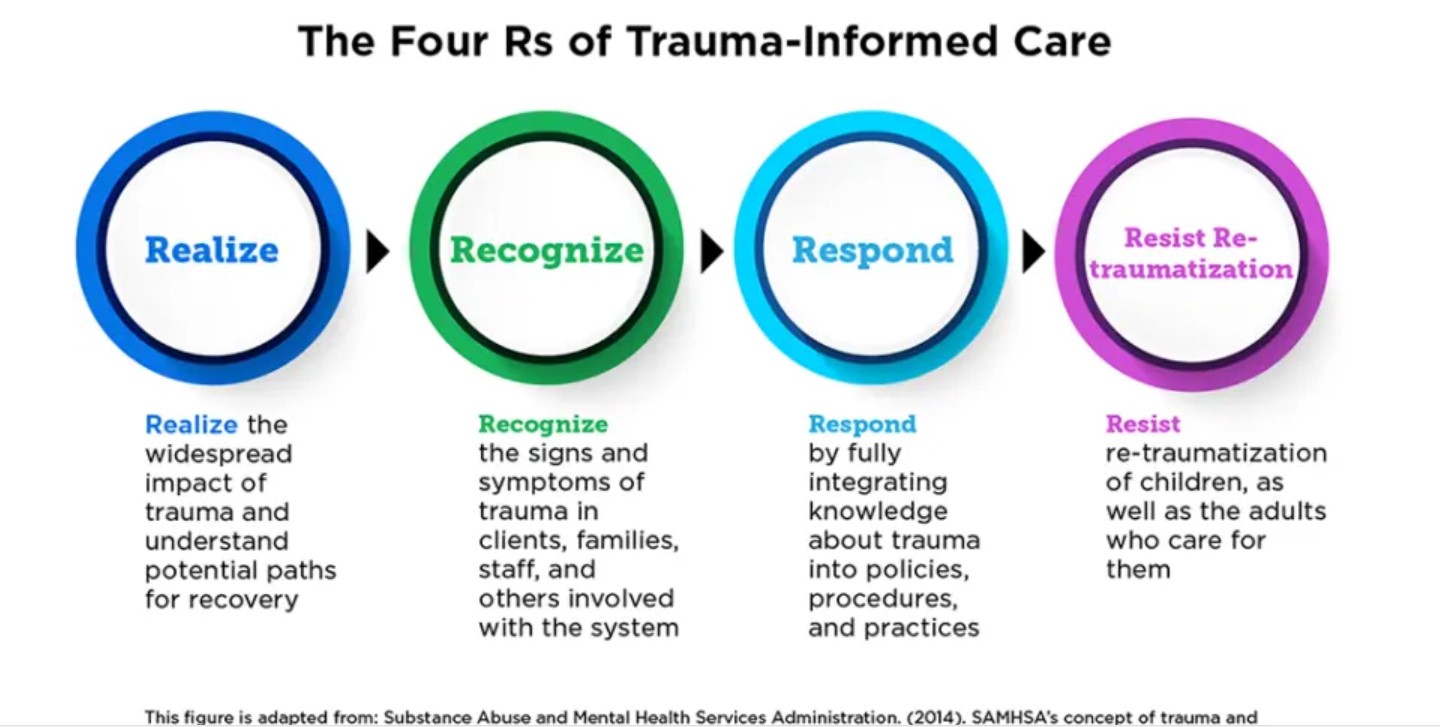
Trauma-informed approaches involve understanding, recognizing, and responding to the effects of all types of trauma. A trauma-informed organization prioritizes and adapts:
Safety: Ensuring physical and emotional safety for everyone.
Trustworthiness and Transparency: Building trust through transparency and consistency.
Peer Support: Utilizing peer-based support to enhance recovery and healing.
Collaboration and Mutuality: Fostering a partnership approach at all levels.
Empowerment, Voice, and Choice: Prioritizing empowerment and providing choices.
Cultural, Historical, and Gender Issues: Recognizing and addressing cultural and historical factors.
A trauma-informed approach is essential for organizations aiming to support individuals who have experienced trauma. The Substance Abuse and Mental Health Services Administration (SAMHSA) outlines ten key domains that provide a framework for embedding trauma-awareness and sensitivity within organizational practices. By focusing on these domains, organizations can create environments that promote healing and resilience, ensuring that trauma-informed care becomes a foundational aspect of their mission and operations. Below is the list of domains that guide the implementation of this approach. You can learn more about each domain by viewing the linked webinars.
Engagement and Involvement
You can learn more by following these links about Lived Experience and Authentic Engagement and Shared Leadership and Co-design.
|
Governance and Leadership
|
Policy
|
|
Engagement and Involvement
|
Cross Sector Collaboration
|
|
Screening, Assessment, Treatment Services
|
Training and Workforce Development
|
|
Progress Monitoring and Quality Assurance
|
Evaluation
|

Thank you for your contribution!
Help us reach out to more people in the community
Share this with family and friends