Pathways to Learning
We are committed to empowering individuals, families, and communities by providing comprehensive resources on Adverse Childhood Experiences (ACEs), Positive Childhood Experiences (PCEs), resilience, trauma-informed approaches, and healing-centered practices. Our goal is to foster understanding, promote healing, and build resilience for a brighter, healthier future.
Explore Our Educational Resources
On Healing On Trauma On Resilience
-
What is Trauma?
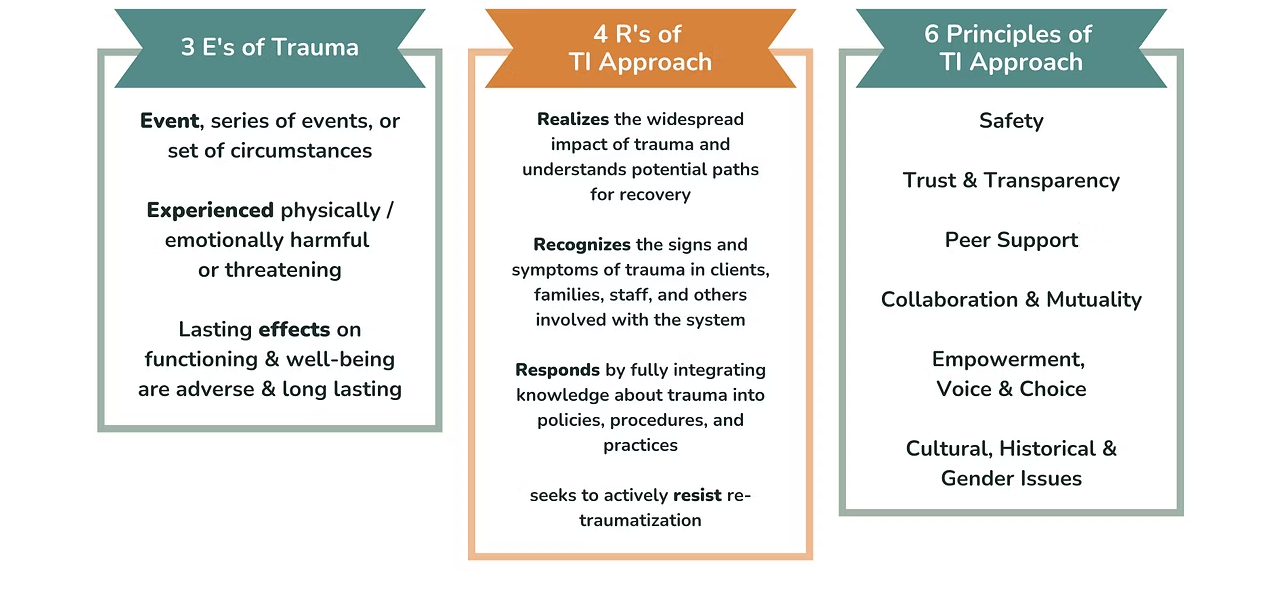
Share What is Trauma? on Facebook Share What is Trauma? on Twitter Share What is Trauma? on Linkedin Email What is Trauma? linkThe Substance Abuse and Mental Health Services Administration (SAMHSA) describes individual trauma as an event or circumstance resulting in physical harm, emotional harm, and/or life-threatening harm. Individual trauma results from an event, series of events, or set of circumstances that is experienced by an individual as physically or emotionally harmful or life threatening and that has lasting adverse effects on the individual’s functioning and mental, physical, social, emotional, or spiritual well-being.
SAMHSA offers free infographics and facts about the impact of trauma on children. Children are among the most vulnerable after traumatic events or disasters. Traumatic stress occurs when a child (0-18 years) feels intensely threatened by an event they experience or witness. Learn more at Understanding Child Trauma - What is Childhood Trauma? | SAMHSA
The Trauma-Informed Care Implementation Resource Center provides a helpful fact sheet that you can download that explains What is Trauma?
The National child Traumatic Stress Network offers parents information about child traumatic stress (CTS), the best way to treat CTS, what parents can do at home for their children, and how parents can make sure their children receive support at school. You can download their free guide here: Understanding Child Trauma. The mission of ECHO is to educate families, communities and professionals about trauma and resilience in order to promote survivor empowerment, resolve individual and community-level trauma, and create the safe, stable, nurturing relationships that break the cycle of generational trauma. They provide training and resources, including free infographics like this one about the PHYSICAL IMPACT OF TRAUMA.
In this 7-minute video, the author of “The Body Keeps the Score” Bessel van der Kolk, explains What is Trauma?
-
Understanding Trauma-Informed Approaches
Share Understanding Trauma-Informed Approaches on Facebook Share Understanding Trauma-Informed Approaches on Twitter Share Understanding Trauma-Informed Approaches on Linkedin Email Understanding Trauma-Informed Approaches linkTrauma-informed approaches involve understanding, recognizing, and responding to the effects of all types of trauma. A trauma-informed organization prioritizes and adapts:
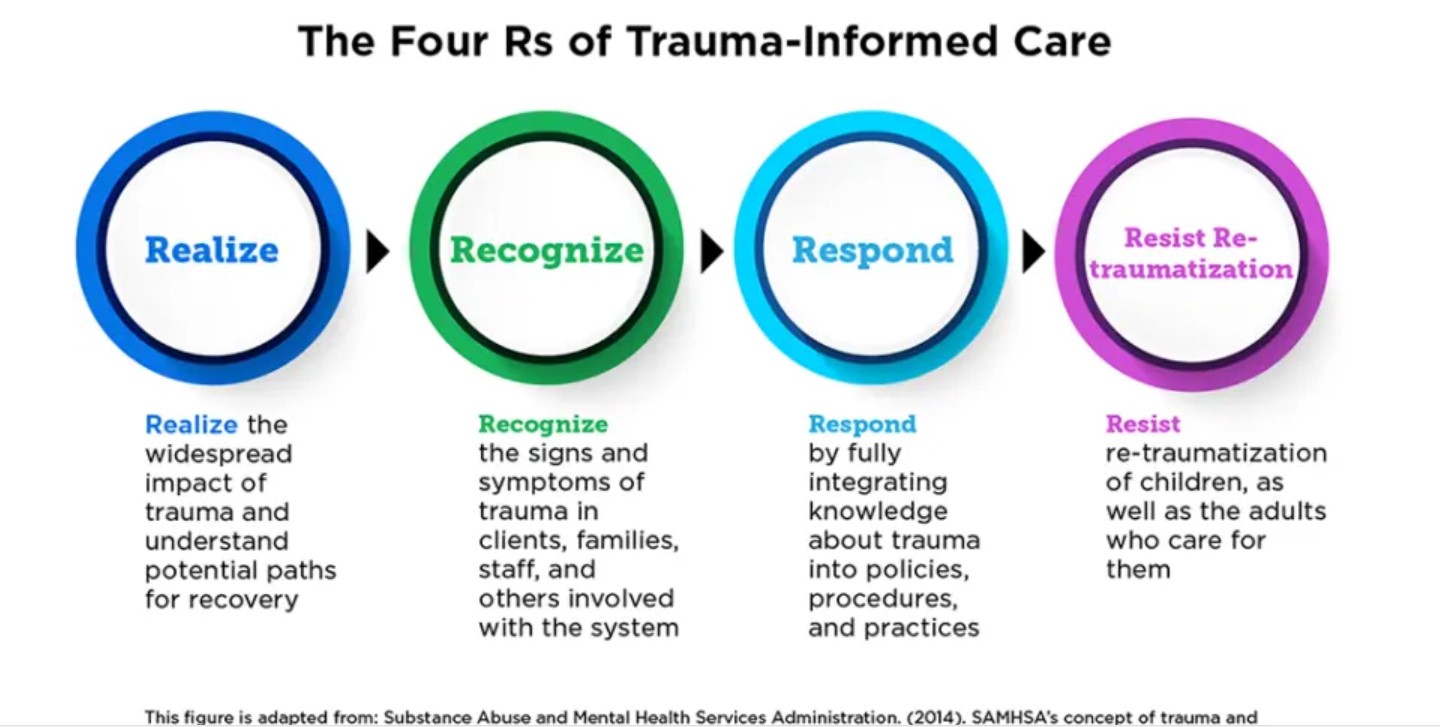
The Six Principles of Trauma-Informed CareSafety: Ensuring physical and emotional safety for everyone.
Trustworthiness and Transparency: Building trust through transparency and consistency.
Peer Support: Utilizing peer-based support to enhance recovery and healing.
Collaboration and Mutuality: Fostering a partnership approach at all levels.
Empowerment, Voice, and Choice: Prioritizing empowerment and providing choices.
Cultural, Historical, and Gender Issues: Recognizing and addressing cultural and historical factors.
Explore the Ten Domains of Implementation
A trauma-informed approach is essential for organizations aiming to support individuals who have experienced trauma. The Substance Abuse and Mental Health Services Administration (SAMHSA) outlines ten key domains that provide a framework for embedding trauma-awareness and sensitivity within organizational practices. By focusing on these domains, organizations can create environments that promote healing and resilience, ensuring that trauma-informed care becomes a foundational aspect of their mission and operations. Below is the list of domains that guide the implementation of this approach. You can learn more about each domain by viewing the linked webinars.
Physical Environment
Engagement and Involvement
You can learn more by following these links about Lived Experience and Authentic Engagement and Shared Leadership and Co-design.Financing
Governance and LeadershipPolicyEngagement and InvolvementCross Sector CollaborationScreening, Assessment, Treatment ServicesTraining and Workforce DevelopmentProgress Monitoring and Quality AssuranceEvaluation -
Healing Centered Schools Model
Share Healing Centered Schools Model on Facebook Share Healing Centered Schools Model on Twitter Share Healing Centered Schools Model on Linkedin Email Healing Centered Schools Model link The Healing Centered Schools approach is more than just a model—it’s a transformative process that redefines what it means to be an effective and compassionate school. When students feel safe, supported, and understood, they can focus on learning, build positive relationships, and regulate their emotions. This leads to improved attendance, fewer behavioral issues, improved academic outcomes, and a stronger school culture. For staff, trauma informed practices provide the support needed to manage stress and avoid burnout, fostering a healthier, more sustainable work environment. For students, addressing trauma early in their lives sets them on a path toward a healthier, more successful future. By embracing HCS, we create schools where every student has the opportunity to thrive, regardless of their past experiences. We invite you to join us on this transformative journey to support the well-being of your students, staff, and communities. Want to learn more?
 Click on the links:
HCSchools Description trifold.pdf
HC Schools Video: https://feaonlinelearning.org/library/video_presentations/2235Want to connect with this opportunity? Contact Mary M. Reece, Ed.D.
Director of Special Projects
NJ Principals & Supervisors Association
Foundation for Educational Administration
p: 609-860-1200 · e:mreece@njpsa.org -
Science of Resilience
Share Science of Resilience on Facebook Share Science of Resilience on Twitter Share Science of Resilience on Linkedin Email Science of Resilience link
While adverse experiences can have a profound and lasting impact on health and well-being, they do not have to define an individual's future. The science of resilience shows us that the brain and body have a remarkable capacity for healing and adaptation.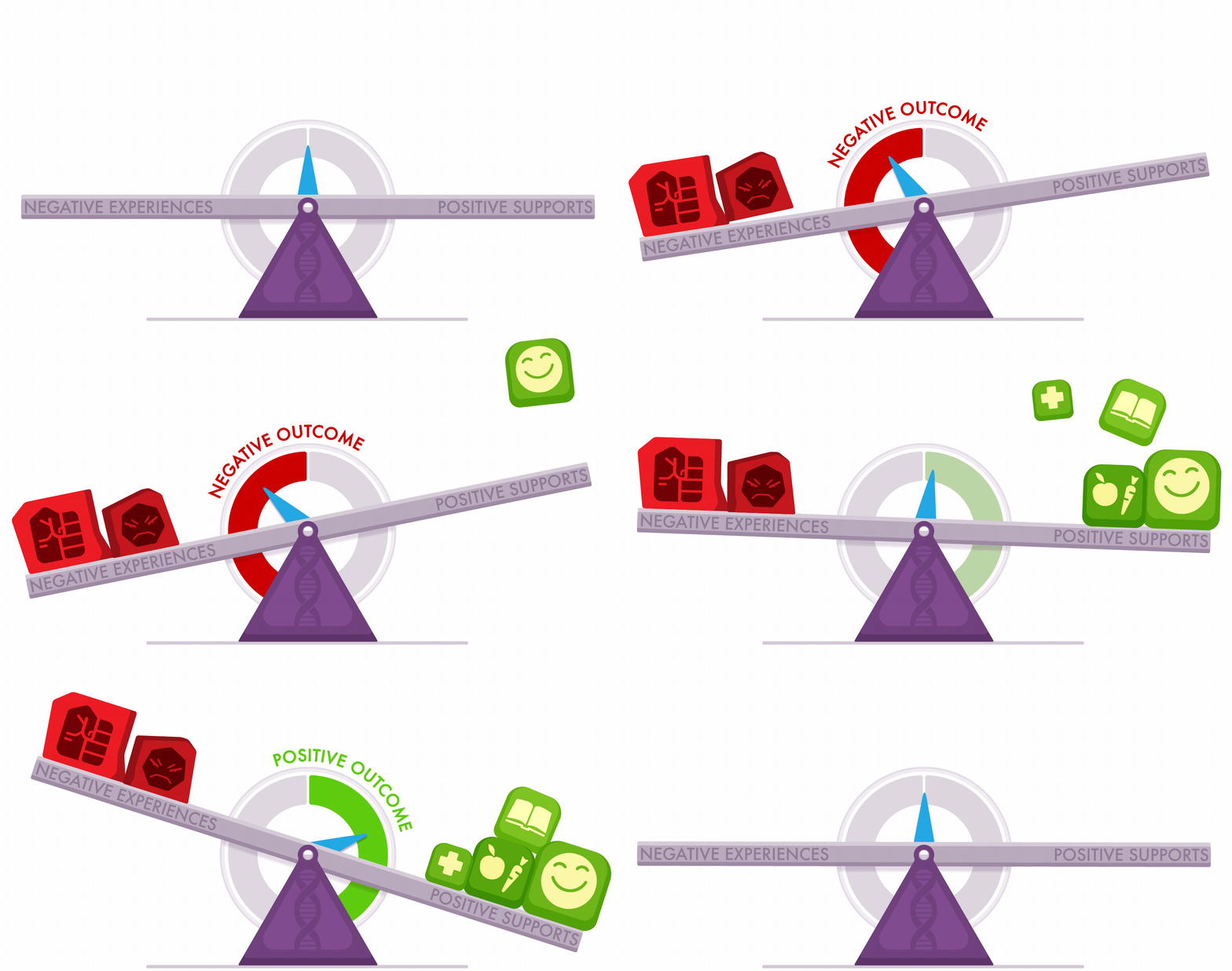 Resilience Scale » Alberta Family Wellness InitiativeRecent advancements in neuroscience and a growing body of research are actively cultivating resilience into trauma informed approaches.
 Concepts like neuroplasticity and neurogenesis demonstrate that the brain can create new neural pathways and cells throughout a person's life, offering a biological basis for recovery and growth.
This approach is universal, promoting whole-person care and empowering individuals to build a greater capacity for self-regulation and self-care.
Watch this 7-minute video from the Alberta Family Wellness Initiative to learn more about the
Brain's Journey to Resilience.