-
What is Trauma?
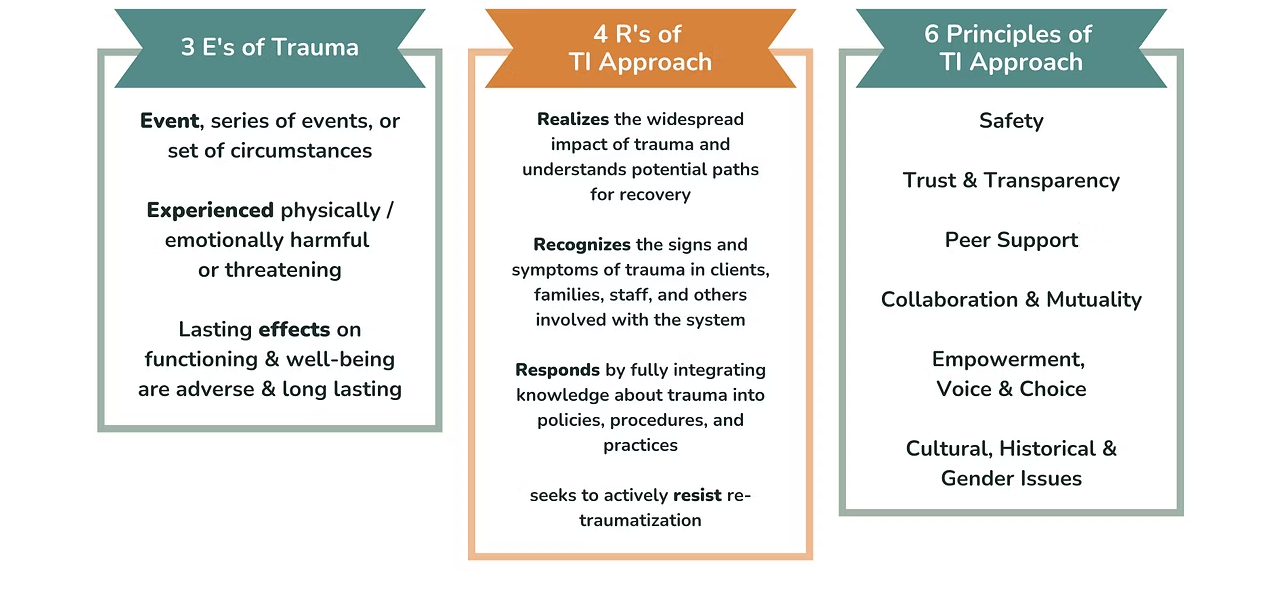
Share What is Trauma? on Facebook Share What is Trauma? on Twitter Share What is Trauma? on Linkedin Email What is Trauma? linkThe Substance Abuse and Mental Health Services Administration (SAMHSA) describes individual trauma as an event or circumstance resulting in physical harm, emotional harm, and/or life-threatening harm. Individual trauma results from an event, series of events, or set of circumstances that is experienced by an individual as physically or emotionally harmful or life threatening and that has lasting adverse effects on the individual’s functioning and mental, physical, social, emotional, or spiritual well-being.
SAMHSA offers free infographics and facts about the impact of trauma on children. Children are among the most vulnerable after traumatic events or disasters. Traumatic stress occurs when a child (0-18 years) feels intensely threatened by an event they experience or witness. Learn more at Understanding Child Trauma - What is Childhood Trauma? | SAMHSA
The Trauma-Informed Care Implementation Resource Center provides a helpful fact sheet that you can download that explains What is Trauma?
The National child Traumatic Stress Network offers parents information about child traumatic stress (CTS), the best way to treat CTS, what parents can do at home for their children, and how parents can make sure their children receive support at school. You can download their free guide here: Understanding Child Trauma. The mission of ECHO is to educate families, communities and professionals about trauma and resilience in order to promote survivor empowerment, resolve individual and community-level trauma, and create the safe, stable, nurturing relationships that break the cycle of generational trauma. They provide training and resources, including free infographics like this one about the PHYSICAL IMPACT OF TRAUMA.
In this 7-minute video, the author of “The Body Keeps the Score” Bessel van der Kolk, explains What is Trauma?
-
Understanding Trauma-Informed Approaches
Share Understanding Trauma-Informed Approaches on Facebook Share Understanding Trauma-Informed Approaches on Twitter Share Understanding Trauma-Informed Approaches on Linkedin Email Understanding Trauma-Informed Approaches linkTrauma-informed approaches involve understanding, recognizing, and responding to the effects of all types of trauma. A trauma-informed organization prioritizes and adapts:
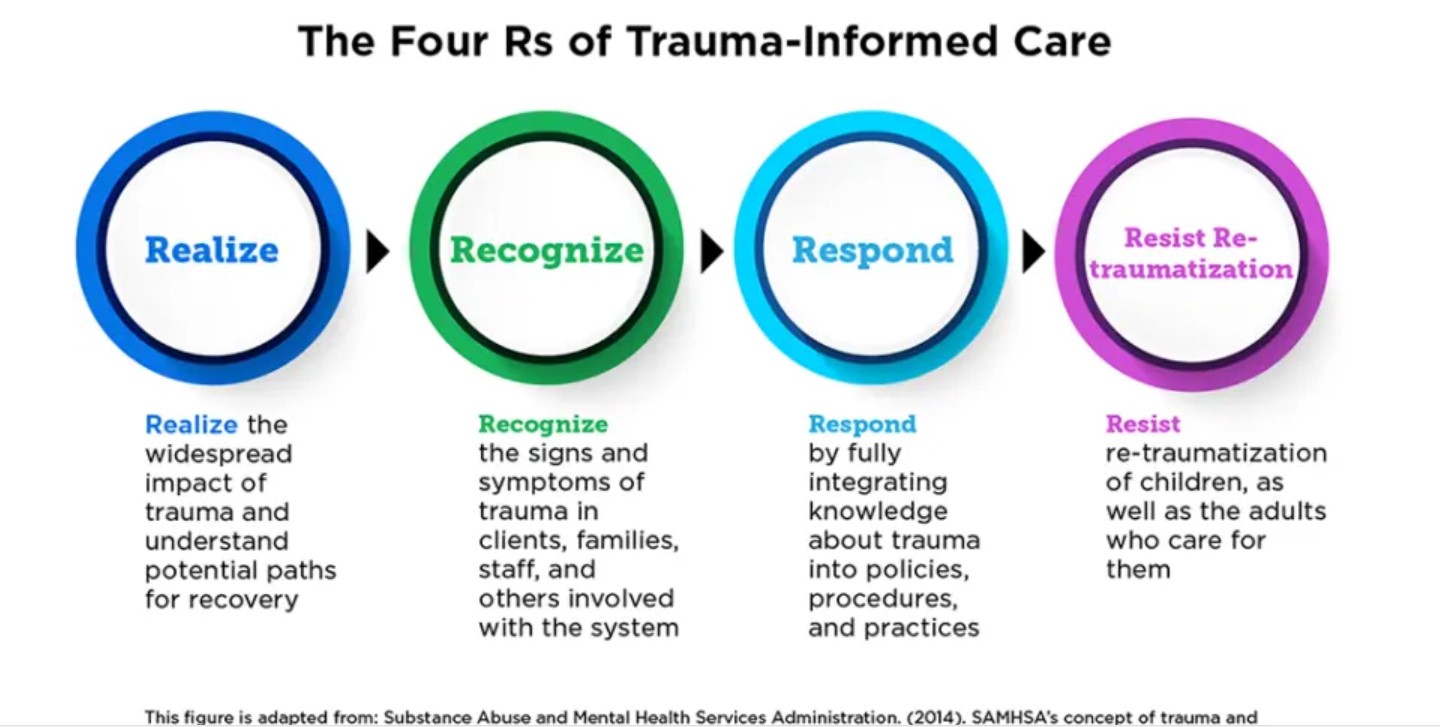
The Six Principles of Trauma-Informed CareSafety: Ensuring physical and emotional safety for everyone.
Trustworthiness and Transparency: Building trust through transparency and consistency.
Peer Support: Utilizing peer-based support to enhance recovery and healing.
Collaboration and Mutuality: Fostering a partnership approach at all levels.
Empowerment, Voice, and Choice: Prioritizing empowerment and providing choices.
Cultural, Historical, and Gender Issues: Recognizing and addressing cultural and historical factors.
Explore the Ten Domains of Implementation
A trauma-informed approach is essential for organizations aiming to support individuals who have experienced trauma. The Substance Abuse and Mental Health Services Administration (SAMHSA) outlines ten key domains that provide a framework for embedding trauma-awareness and sensitivity within organizational practices. By focusing on these domains, organizations can create environments that promote healing and resilience, ensuring that trauma-informed care becomes a foundational aspect of their mission and operations. Below is the list of domains that guide the implementation of this approach. You can learn more about each domain by viewing the linked webinars.
Physical Environment
Engagement and Involvement
You can learn more by following these links about Lived Experience and Authentic Engagement and Shared Leadership and Co-design.Financing
Governance and LeadershipPolicyEngagement and InvolvementCross Sector CollaborationScreening, Assessment, Treatment ServicesTraining and Workforce DevelopmentProgress Monitoring and Quality AssuranceEvaluation -
Healing Centered Schools Model
Share Healing Centered Schools Model on Facebook Share Healing Centered Schools Model on Twitter Share Healing Centered Schools Model on Linkedin Email Healing Centered Schools Model link
The Healing Centered Schools approach is more than just a model—it’s a transformative process that redefines what it means to be an effective and compassionate school. When students feel safe, supported, and understood, they can focus on learning, build positive relationships, and regulate their emotions. This leads to improved attendance, fewer behavioral issues, improved academic outcomes, and a stronger school culture. For staff, trauma informed practices provide the support needed to manage stress and avoid burnout, fostering a healthier, more sustainable work environment. For students, addressing trauma early in their lives sets them on a path toward a healthier, more successful future. By embracing HCS, we create schools where every student has the opportunity to thrive, regardless of their past experiences. We invite you to join us on this transformative journey to support the well-being of your students, staff, and communities. Want to learn more? Click on the links:
HCSchools Description trifold.pdf
HC Schools Video: https://feaonlinelearning.org/library/video_presentations/2235Want to connect with this opportunity? Contact Mary M. Reece, Ed.D.
Director of Special Projects
NJ Principals & Supervisors Association
Foundation for Educational Administration
p: 609-860-1200 · e:mreece@njpsa.org -
Trauma Informed Schools
Share Trauma Informed Schools on Facebook Share Trauma Informed Schools on Twitter Share Trauma Informed Schools on Linkedin Email Trauma Informed Schools linkThe Center for Safe and Resilient Schools have supported communities across the United States and around the world before, during, and after crises. Launched by leading experts in the field of trauma-informed schools, The Center has pioneered national practices for threat assessment, crisis response, and trauma-responsive strategies.
Healing Schools Project
Healing Schools Project is aimed at ending the teacher retention crisis—creating schools where educators feel valued, supported, and committed to staying. They create a safe environment for teachers and leaders to talk about their experiences, and address potential barriers that may be preventing teachers from staying in the profession. Check out their free resources for educator wellness.Resilient Futures
Resilient Futures is a nonprofit founded in 2018 to promote well-being and healing through trauma-informed practices. They partner with communities to address the widespread impact of trauma using evidence-based strategies rooted in the principles of trauma-informed care. The offer free resources for educators to help understand trauma and foster healing, creating safe spaces for themselves and their students. -
Trauma Informed Educational Material
Share Trauma Informed Educational Material on Facebook Share Trauma Informed Educational Material on Twitter Share Trauma Informed Educational Material on Linkedin Email Trauma Informed Educational Material linkCreating Trauma-Informed Systems | The National Child Traumatic Stress Network
The National Child Traumatic Stress Network NCTSN.org is a resource for the public, professionals, and others who care about children and are concerned about child traumatic stress. This link provides resources on how to create trauma-Informed systems for various sectors such as school, health care, child welfare, justice system and more.Trauma-Informed & Healing-Centered Practices
NJ Department of Education website line for resources to support schools in creating trauma-informed and healing centered practices.Community Advocacy Network | Campaign for Trauma-Informed Policy and Practice
National grassroots advocacy and policymaking campaign committed to healing and resilience.Vision | Campaign for Trauma-Informed Policy and Practice
CTIPP envisions a future where individuals, families, organizations, communities, and systems stand empowered to realize their full potential. The enclosed vision presents a variety of concrete considerations that are critical to preventing and mitigating trauma and adversity, as well as promoting resiliency, recovery, healing, and growth so that all are supported to flourish and thrive.Interview: The Need for Trauma-Informed Schools
Article on the need for trauma-informed schools interview features Q&As with both professionals and users of the mental health system on topics of special interest to parents and families. They are designed to provide a closer look at new research, trends, and people.The Vicarious Trauma Toolkit | Introduction | Office for Victims of Crime
The Vicarious Trauma Toolkit (VTT) was developed on the premise that exposure to the traumatic experiences of other people—known as vicarious trauma.The VTT includes tools and resources tailored specifically to these fields that provide the knowledge and skills necessary for organizations to address the vicarious trauma needs of their staff. To begin exploring the VTT, select one of the disciplines below and visit the comprehensive Compendium of Resources.
Fight, Flight, Freeze, Fawn, and Flop: Responses to Trauma | All Points North
Brief overview of five trauma responses to trauma -
Trauma Informed Resources for Organizations
Share Trauma Informed Resources for Organizations on Facebook Share Trauma Informed Resources for Organizations on Twitter Share Trauma Informed Resources for Organizations on Linkedin Email Trauma Informed Resources for Organizations linkCenter for Trauma-Informed Policy and Practice (CTIPP)
This CTIPP toolkit provides educational concepts and practical strategies to support team members (I.E., defined in the toolkit as employees, staff, workers, interns, fellows, leadership, human resources and administrative professionals, volunteers, committee and board members, etc.) in advocating for more trauma-informed workplacesSubstance Abuse and Mental Health Services Administration (SAMHSA)
Explore SAMHSA's comprehensive guide on implementing trauma-informed approaches. This guide offers a detailed framework to help organizations integrate trauma-sensitive practices into their operations, ensuring a supportive environment for everyone.Center for Health Care Strategies
This website, developed by the Center for Health Care Strategies, provides resources from trauma-informed care leaders across the country to help improve patient outcomes, increase patient and staff resilience, and reduce avoidable health care service use and costs. While geared toward health care, many of these lessons from this website can be applied elsewhere, including in social services and education.Trauma Informed Oregon
Trauma Informed Oregon serves as a centralized source of information and resources for trauma informed efforts. Access learning resources, knowledge and capacity building and tool kits.Project Echo
The mission at Project Echo is to educate families, communities and professionals about trauma and resilience in order to promote survivor empowerment, resolve individual and community-level trauma, and create the safe, stable, nurturing relationships that break the cycle of generational trauma. -
Trauma Informed Information Links
Share Trauma Informed Information Links on Facebook Share Trauma Informed Information Links on Twitter Share Trauma Informed Information Links on Linkedin Email Trauma Informed Information Links linkOriginal Road Map to TIC Road Map to Trauma Informed Care • Trauma Informed Oregon
Physical Impact of Trauma image PhysicalImpacts_06.30.21.pdf
Screening Tool and Gudelines TIO | Trauma Informed Care Screening Tool
TIC Wisconsin Model TICWisconsinModel2017.pdf
Trauma Informed Workplace TOOLKIT: Trauma-Informed Workplaces
-
Trauma Informed Implementation Guidance, Tools, & Toolkits
Share Trauma Informed Implementation Guidance, Tools, & Toolkits on Facebook Share Trauma Informed Implementation Guidance, Tools, & Toolkits on Twitter Share Trauma Informed Implementation Guidance, Tools, & Toolkits on Linkedin Email Trauma Informed Implementation Guidance, Tools, & Toolkits linkSAMHSA Practical Guide for Trauma Informed Approaches builds on SAMHSA’s 2014 SAMHSA Concept for Trauma Informed Care and TIP 57: Trauma-Informed Care in Behavioral Health Services. Its primary goals are to provide implementation strategies across multiple domains—from governance to staff training to evaluation—and to encourage leadership to adopt a TIA at the organizational levels. This two page infographic provides information on the 10 implementation domains and 6 principles of trauma informed approaches.
The National Council For Behavioral Health provides this guide Trauma Informed Care Sustainability Guide as well as various resources and tools for organizations that deliver mental health and substance use recovery services in America.
Trauma Informed Oregon provides a Road Map to trauma informed care hat shared the common steps of implementation moves through a number of common steps that organizations move through in a developmental way. The Trauma Informed Care Screening Tool builds on the Road Map by delving into each phase and offering a series of developmental actions; these tool go hand in hand.
The National Child Traumatic Stress Network (NCTSN) is a resource for the public, professionals, and others who care about children and are concerned about child traumatic stress. They provide resources on how to create trauma-Informed systems for various sectors such as school, health care, child welfare, justice system and more. Learn about the importance trauma screening and trauma-informed mental health assessments.
The Campaign for Trauma-Informed Policy and Practice (CTIPP) provides a variety of tools and considerations that are critical to preventing and mitigating trauma and adversity, as well as promoting resiliency, recovery, healing, and growth so that all are supported to flourish and thrive. Their Community Advocacy Network is a national grassroots advocacy and policymaking campaign committed to healing and resilience.
The Vicarious Trauma Toolkit (VTT) was developed on the premise that exposure to the traumatic experiences of other people—known as vicarious trauma. The VTT includes tools and resources tailored specifically to these fields that provide the knowledge and skills necessary for organizations to address the vicarious trauma needs of their staff. To begin exploring the VTT, select one of the disciplines below and visit the comprehensive Compendium of Resources.
-
Frameworks on Trauma Informed Approaches
Share Frameworks on Trauma Informed Approaches on Facebook Share Frameworks on Trauma Informed Approaches on Twitter Share Frameworks on Trauma Informed Approaches on Linkedin Email Frameworks on Trauma Informed Approaches linkReview New jersey’s Department of Children and Families, Office of Resilience Trauma Informed Approach Continuum Definitions.
The continuum is based on The Missouri Model: A Developmental Framework for Trauma-Informed Care and The Wisconsin Continuum of Trauma-Informed Care. It also includes concepts from The Flourish Agenda, Healing Centered Engagement.
The New Jersey Department of Education shares resources to support schools in creating Trauma-Informed & Healing-Centered Practices. Learn how schools have the opportunity to establish supportive, positive learning environments and practices for all students that not only provide structure but are also safe, welcoming, and relationship-centered.
The Need for Trauma-Informed Schools is discussed in this article through questions and answers with both professionals and users of the mental health system on topics of special interest to parents and families. They are designed to provide a closer look at new research, trends, and people.
-
Science of Resilience
Share Science of Resilience on Facebook Share Science of Resilience on Twitter Share Science of Resilience on Linkedin Email Science of Resilience link
While adverse experiences can have a profound and lasting impact on health and well-being, they do not have to define an individual's future. The science of resilience shows us that the brain and body have a remarkable capacity for healing and adaptation.
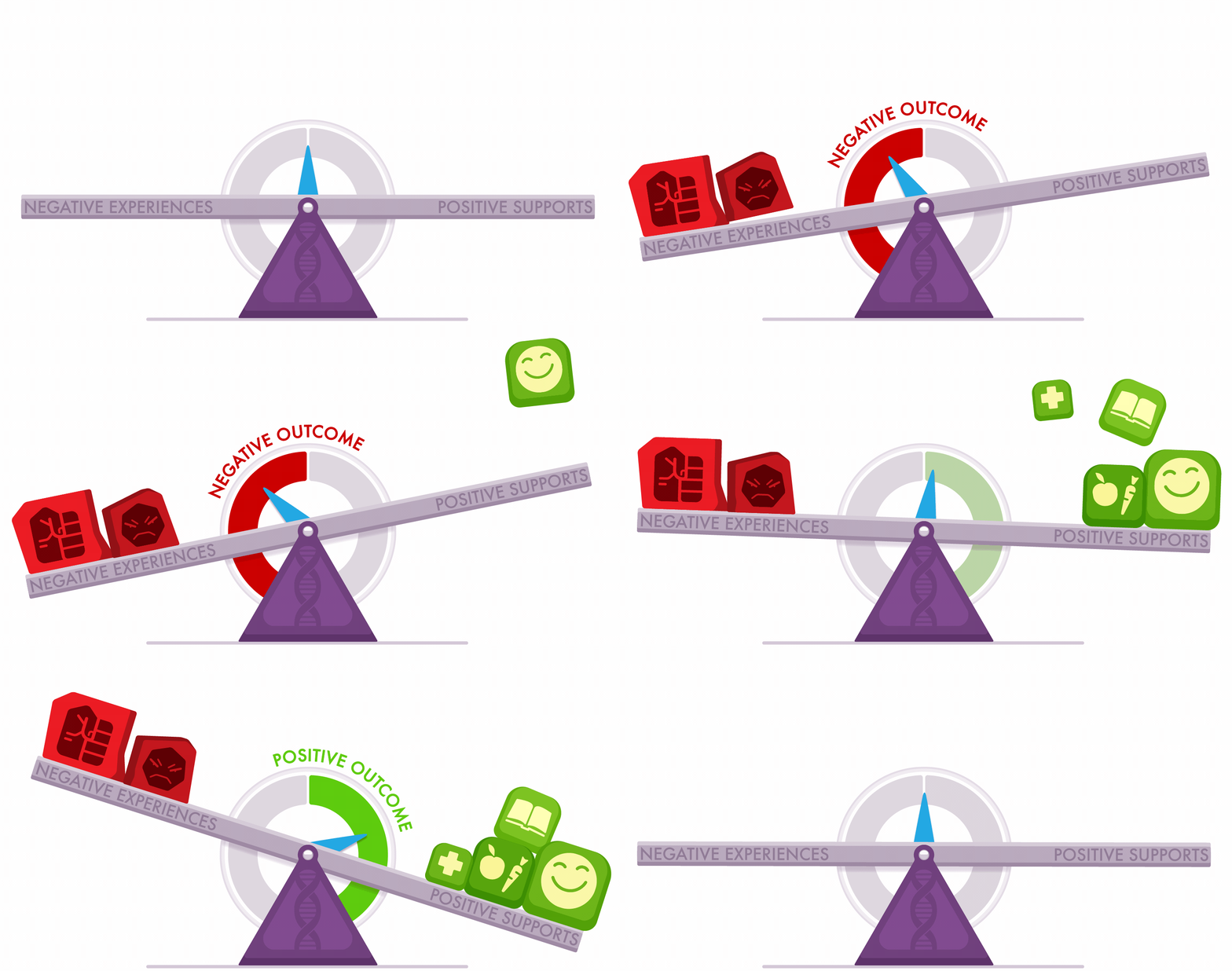
Resilience Scale » Alberta Family Wellness InitiativeRecent advancements in neuroscience and a growing body of research are actively cultivating resilience into trauma informed approaches. Concepts like neuroplasticity and neurogenesis demonstrate that the brain can create new neural pathways and cells throughout a person's life, offering a biological basis for recovery and growth.
This approach is universal, promoting whole-person care and empowering individuals to build a greater capacity for self-regulation and self-care.
Watch this 7-minute video from the Alberta Family Wellness Initiative to learn more about the
Brain's Journey to Resilience.